
Traditions & Customs of Raksha Bandhan - A Complete Guide | Rakhi.com
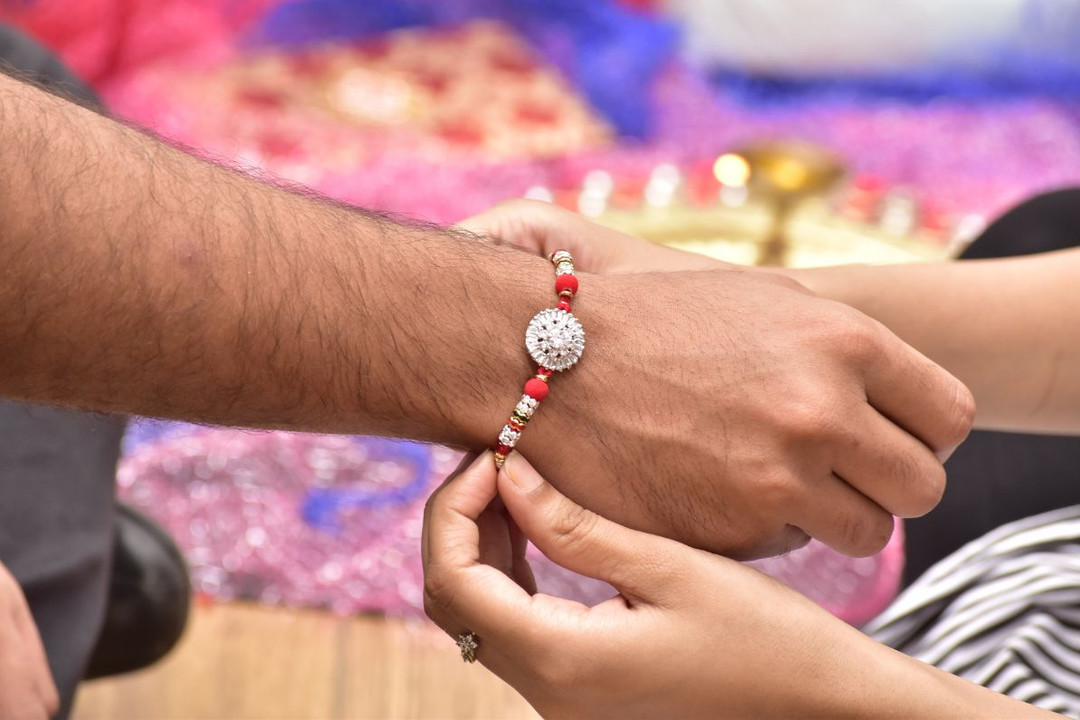
The ceremony is the same in its essentials across India. The thali, the tilak, the thread, the sweets, the gift. But walk from one state to the next and the festival gathers different layers - different names, different accompanying observances, regional rituals that have accumulated over generations and made the day theirs. Here is the full picture: the ceremony step by step, and then what changes depending on where you are.
The Puja Thali - What Goes In and Why
The ceremony begins with the thali. A sister arranges it the morning of Raksha Bandhan - sometimes the night before if the day starts early. Each item has been placed there for a reason.
|
ITEM |
PURPOSE |
|
Roli |
Vermillion powder for the tilak. Applied to the brother's forehead with the right ring finger. Marks honour and offers a prayer for his long life. |
|
Akshat / Chawal |
Raw rice grains placed on the tilak after the roli. Represents purity, abundance, and prosperity. In many traditions the rice is mixed with a little turmeric first. |
|
Diya |
An oil lamp, lit during the aarti. Represents divine light and the removal of darkness. The flame should be burning before the ceremony begins. |
|
Rakhi thread |
The centrepiece. The thread chosen by the sister, carried in the thali until the moment of tying. |
|
Mithai |
Two or three pieces. Sister feeds brother first; he feeds her in return. The sweetness of the exchange reflects the sweetness of the bond. |
|
Water or panchamrit |
A small vessel, used in some traditions for a brief ritual cleansing before the ceremony. |
|
Flowers |
Fresh flowers in some families - marigold, rose, or jasmine. Not essential, but they make the thali look the way a festive thali should look. |
The Ceremony - What Happens and In What Order
The sequence below is the one followed across most of India, with regional variations noted separately afterwards.
- Bathe and dress in fresh clothes. Both siblings. The physical preparation signals the seriousness of what follows. Sisters often wear a saree or salwar-kameez. Brothers wear a kurta, or at minimum something clean and fresh. The clothes matter - not because anyone will judge them, but because putting them on is part of preparing yourself for the ceremony.
- Arrange the puja space and light the diya. The thali is set, the diya lit, and in many families a small image or photograph of a deity or ancestor is placed nearby. The diya should be burning before the ceremony begins.
- Brother sits facing east. This is the classical direction for receiving a ritual. In practice many families simply sit wherever is comfortable, but east is traditional.
- Perform aarti. The sister circles the lit diya in a clockwise arc in front of her brother's face - a prayer for his radiance, his health, his protection from everything that might diminish him. This is usually accompanied by a brief prayer or a Sanskrit shloka.
- Apply tilak. Roli on the brother's forehead, drawn with the ring finger of the right hand. Then a few grains of akshat placed on the tilak. Both steps represent honour and a blessing for long life.
- Tie the rakhi. On the right wrist, three times traditionally - one knot for each turn of the thread. A prayer or a spoken wish as the thread is tied. This is the central moment. Everything before it is preparation; this is the ceremony itself.
- Exchange sweets. The sister feeds her brother a piece of mithai first. He feeds her one in return. The exchange is brief and easy to rush - it should not be rushed.
- Brother gives his gift. Traditionally money, jewellery, or a new piece of clothing. Today the range is wide. What matters is that the gift is a concrete expression of the same love and commitment the rakhi carries.
- Seek elders' blessings. Both siblings bow together before parents and grandparents, who bless them both. The ceremony closes here - the sibling bond placed within the wider context of family and continuity.
Regional Rakhi Traditions Across India
Maharashtra — Narali Purnima
In Maharashtra, and particularly along the Konkan coast, the same full moon that marks Raksha Bandhan is also Narali Purnima - the Coconut Full Moon. Fishing communities offer coconuts to Varuna, the sea god, marking the formal end of the monsoon fishing ban. A fisherman's family in Konkan celebrates both on the same day: Raksha Bandhan in the morning, the coconut ceremony at the water in the afternoon. The two observances have nothing to do with each other historically and feel entirely natural together.
West Bengal — Jhulan Purnima
In Bengal this day overlaps with Jhulan Purnima, the swing festival for Radha and Krishna. Temples install decorated swings for the divine couple and devotees come to set them swinging. The full moon carries a devotional weight in Bengal that runs alongside rather than beneath the Raksha Bandhan ceremony. Many Bengali households observe both.
South India — Avani Avittam
Among Brahmin communities in Tamil Nadu, Kerala, and Andhra Pradesh, the same full moon is Avani Avittam - the day on which men change their yajnopavita, the sacred thread worn across the chest, and renew their commitment to the Vedas. It is one of the most important events in the South Indian Brahmin calendar. In households where both traditions are observed, the morning is busy: the brother's yajnopavita is renewed, the sister's rakhi is tied, the ceremonies running alongside each other.
Rajasthan — The Rakhi Thali as an Occasion in Itself
Rajasthani women tend to treat the thali arrangement as its own extended practice. Intricate roli patterns drawn on the thali surface, kajal (kohl) included for protection against the evil eye, and ghewar - a honeycomb-textured sweet made specifically during the Shravan-Bhadra season - on the plate alongside the more common mithai. The ceremony itself runs longer than in many other states, with additional prayers and ritual steps observed before the rakhi is tied. A Rajasthani Raksha Bandhan ceremony in a traditional household is not something that is over in twenty minutes.
Odisha — Gamha Purnima
In Odisha, the day is Gamha Purnima. Cattle are bathed, garlanded with flowers, and offered special foods a formal acknowledgement of their place in the agricultural household. In farming families, the animals are tended to in the early morning before the rakhi ceremony begins. It is not two separate observances sitting awkwardly beside each other. In a household where the cattle are the livelihood and have been since the family's grandparents' time, including them in a day of gratitude and ritual is simply what the day calls for.
Modern Traditions - What Has Changed
The video call ceremony
For diaspora families and for siblings separated by distance within India, the ceremony now routinely happens over a video call. The sister performs it at home - thali set, diya lit - while her brother watches on a screen in another city or country. The rakhi was posted weeks earlier. He ties it on his wrist during the call while she watches. Then they eat sweets on their respective sides of the camera.
This is now entirely normal. The sincerity of the ceremony does not require the same room.
The Lumba Rakhi for Bhabhi
In many families, the sister ties a Lumba rakhi on her sister-in-law's bangle alongside the brother's rakhi. The Lumba is designed to hang from a bangle rather than tie on the wrist. It is the gesture that says: the family has grown, and you are in it. This has become increasingly observed in diaspora celebrations, where the bhabhi may see her husband's family rarely and the gesture carries extra meaning.
Explore Popular Articles
Best Rakhi Gifts for Brother 2026: Order Online Rakhi & Send to Australia, Melbourne, Sydney & Perth
Best Rakhi Gifts for Brother 2026: Order Online Rakhi & Send to Australia, Melbourne, Sydney & Perth...
Send Rakhi to UK 2026: Best Rakhi Gifts for Brother, Sister & Kids | Rakhi.com
Send Rakhi to UK 2026: Best Rakhi Gifts for Brother, Sister & Kids | Rakhi.com Rakshabandhan is a fe...

Top 10 Rakhi Gifts for Sister 2026 – Thoughtful, Unique & Delivered Worldwide
Top 10 Rakhi Gifts for Sister 2026 – Unique & Thoughtful Ideas | Rakhi.com Introduction: The Gift Th...

Top 100 Happy Rakhi Wishes 2026 for Brothers and Sister - Rakhi.com
Top 100 Happy Rakhi Wishes 2026 for Brothers and Sister Raksha Bandhan is a festival built on words...

How to Send Rakhi to New Zealand Online in 2026 – Complete Guide
If you have a brother or sister living in New Zealand, Raksha Bandhan doesn't have to feel any less...

Rakhi Gifts for Brother 2026 | Best Online Raksha Bandhan Gift Ideas
Raksha Bandhan is one of those rare festivals that manages to feel both deeply traditional and perso...